I remember how Margaret slipped behind the pantry door the very instant the lock clicked shut.
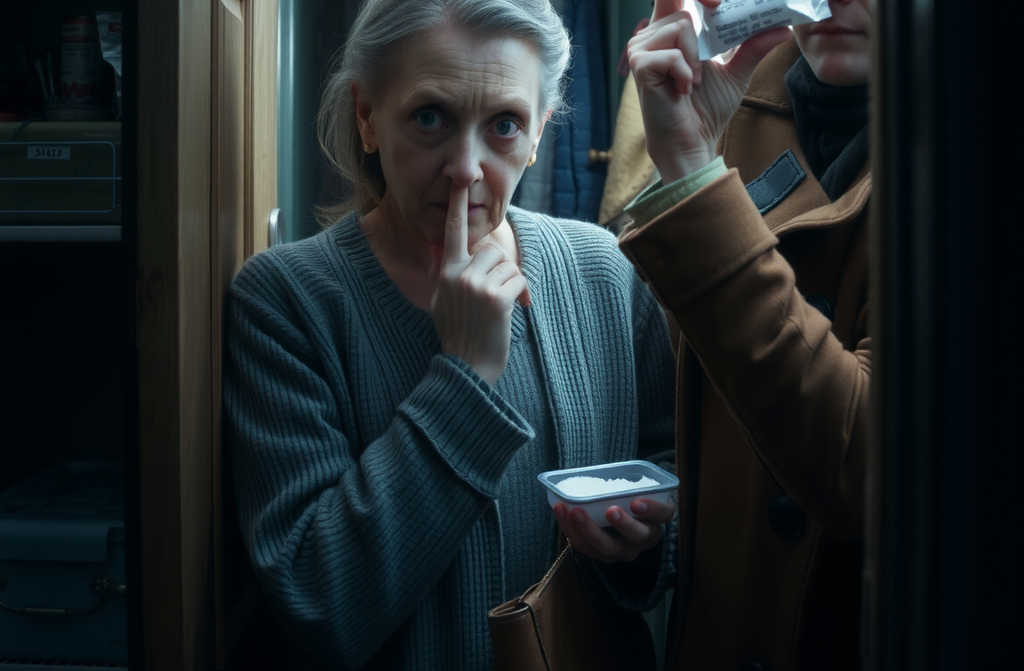
She pressed her back against the row of tins, felt for the inner handle and pulled it just enough to leave a sliver no wider than a finger.
Her breath came in ragged bursts, and she pressed her palm to her mouth, because the hallway was deadsilent; any noise would have travelled through the whole flat.
The front door swung wide.
Tom coughed, stepped into the entrance hall. Through the narrow crack Margaret saw his hands: two white paper bags bulging with groceries, the ropedrawn handles digging into his fingers.
Mum! he called. Are you home?
Margaret clenched her hand tighter.
***
Before all this, Margaret had lived alone for five years. When Kolyaher late husbandsuddenly vanished, as it often happens with those who keep their pain hidden, his heart simply gave out.
The first year without him was the hardest: it wasnt grief that broke her, she could endure it, but the silence in the flat drove her to the edge. Kolyas laugh on the television had been so loud that every word echoed in the kitchen.
In the bathroom he sang blasphemously, mangling words and melody with reckless abandon. Now, with the bathroom door closed, the only sound was the hum of the pipes, a hum that seemed deafening to Margaret.
Her daughter, Ethel, arrived from Manchester in those first few days. She stayed two weeks: cleaning, cooking, and at night curling up on Margarets bed, simply being there without demanding conversation.
That was a priceless comfort.
Her son, Jack, never turned up, neither then nor later. It had been eleven years since Jack disappeared, and Margaret had long stopped explaining the reasons out loud, though inside she replayed the story over and over like an old record.
The tale of his leaving was painful and tangled, as it often is when the truth is buried for too long. Jack had been a difficult child: sharptempered, quick to flare, prone to tantrums over anything.
He barely managed at school, repeated the sixth year, and left with a string of Cs earned through sheer stubbornness. His sister, Ethel, was his opposite: calm, exemplary, a constant Astudent.
Jack resented his sister, snapped at any criticism, and Tom sometimes lost his temper, though he tried hard to hold back.
When Jack turned nineteen, Tom sent him to spend the summer with his mother, the stern old Mrs. Claudia, in a village near York. He thought the boy might learn something from hard work, the smell of earth, a break from city idleness.
Claudia was blunt to the point of cruelty, never one to mince words. When Jack botched something in the garden, she tossed at him, What did you expect, you useless lad?
Jack returned to London the same day, dropped his bag in the hallway, went to the kitchen, sat down and asked in a flat, almost monotone voice,
Is it true?
Margaret looked at Tom; Tom looked at her.
They had been waiting for the right moment to tell him themselves, always postponing, each convincing the other that it was still too early, that he needed a little more time to grow up.
Its true, Margaret said. We took you in when you were an eightmonth old infant. You screamed so loudly you shook the whole room, but the moment you saw us you fell silent and stared at me.
I told Tom then, she added, Our son, theres nowhere else for him.
Jack stood and went to his room. Margaret and Tom sat in the kitchen until midnight, talking about everything but that, because they simply didnt know how to speak of it.
A few days later Jack vanished again, taking the money they had been setting aside for his dormitory roommoney they intended as a surprise for the coming autumn. He made his own surprise first.
Tom spoke of him hardly out loud. In the evenings he would sit for hours by the window, watching the street.
Margaret saw his sorrow, but she never pressed him for details; Tom dealt with his grief through silence, and she respected that. A few years later his heart gave out as well.
Jack turned up at the beginning of April. He knocked gently, didnt ring the bell, just knocked as if unsure anyone would answer.
Margaret opened the door and stood there for a heartbeat, staring at a thirtyyearold man with a noticeable stubble, a slight hunch, a bag of mandarins in his hands.
Mum, he said. Im sorry. I acted foolishly back then.
In a boyish tone.
She didnt know what to do with herself.
I want to make amends, he added. Give me a chance.
She embraced him right on the doorstep. He returned the hug awkwardly, stumbling like someone who had spent years without a proper hug.
Over dinner he talked about his work as a chef, travelling the country from Bristol to Leeds, starting in cheap diners and eventually rising to respectable restaurants. He truly could cook.
Margaret watched him skilfully carve a chicken and thought how oddly life works: a man disappears for eleven years and then returns to fry you a cutlet.
He stayed. He reclaimed his old room, arranged his things on the shelves, and each morning made porridge or scrambled eggs.
Margaret called Ethel every evening.
Back, you say? Ethel said, halfasleep on the other end. Hows he doing?
Fine. Polite. Cooks well.
Mum, are you sure everythings alright? Eleven years is a long time.
Ethel, hes my son. Dont act like a stranger.
She phoned relatives all over Britain, telling them, Jacks back, Jacks home. A cousin in Birmingham laughed on the line, saying theres no smoke without fire and people dont just stroll back from the brink.
Margaret replied that there was no need for gossip; all was well.
About two weeks later she noticed she was tiring far more quickly than before. By evening her head felt as if it were filled with cotton, and in the mornings she was dizzy.
She blamed it on spring: a vitamin deficiency, bloodpressure swings, age. At sixty, health was a fickle thing, and there was nothing specific to complain about. The main thing was that her son was near.
Ethel asked each night how she felt. Margaret said she was fine, a little weary, but it would pass.
Maybe see a doctor? Ethel suggested.
Dont be daft, I wont be running to the GP for every little fatigue. Appointments are weeks away; itll pass on its own.
It didnt pass. Nausea grew, her head felt heavy by lunchtime.
She took vitamins, brewed rosehip tea, and tried not to dwell on it.
One night she woke before six, the grey April sky stretched outside, the street empty. Her mouth was so dry she could barely swallow. She slipped on slippers and went to the kitchen for water. The hallway lights were off; she knew the flat by heart, every turn.
She didnt even reach the kitchen before she stopped.
Jack stood at the stove, a single burner alight beneath a pot of porridge. He held a small clear packet of powder, tipped it into the pot, and stirred carefully with a spoon.
Margaret fled down the corridor, reached the bedroom, threw back the covers and lay on the bed, eyes wide open, staring at the ceiling.
Minutes later the bedroom door creaked. She squeezed her eyes shut, breathing evenly, pretending to be asleep, feeling Jacks gaze from the doorway.
He lingered, closed the door, and slammed the front door.
When Margaret opened her eyes the dawn was breaking. She lay there, counting the dates in her mind: when the sickness began, when the nausea started, when the leaden fatigue settled in.
She counted backwards. It all began the day Jack moved back and took over the cooking.
She got up, dressed, and set off for her neighbour, Mrs. Tamara, on the third floora sensible woman who didnt waste words and could handle a crisis without unnecessary tears. Margaret was just pulling on her coat in the hallway when the lock turned.
She never even realized how she ended up in the pantry.
Through the crack she watched Jack pull out his phone and press it to his ear.
Hello? Yes, Im home. He paused. No, the old womans gone missing, shes nowhere to be found. He paced the hallway. Dont bother, I say.
She thought she had only a little time left. She guessed it was just a vitamin thing or blood pressure. How will it end? he muttered, Well clear the flat fast, its simple, and Ill be with you.
Well survive! he added.
Margaret stood frozen, hand over her mouth, watching him through the sliver.
Blimey, I forgot to drop by the chemist again, he said irritably. Will have to pop in again soon. He swore. Right, Ill be back, wait for me.
The door slammed. Footsteps faded on the stairwell.
Margaret stepped out of the pantry and stood in the middle of the hall. She stared at his coat on the rack, his boots by the door, the spare key on the shelf.
The lower lock only fit her key; shed never given anyone a spare.
She packed her bag in twenty minutespapers, her pension book, a small photograph of Tom in a frame.
She rang Ethel.
Mum, why are you up so early? Ethel yawned into the phone.
Ive decided, love. Im going to come and stay with you.
Ill be waiting. When?
Today.
Today?! Ethel sat up, fully awake. And Jack? He should come too, I want to finally see my brother.
Jacks gone off to find work elsewhere; hes not here now. Ill come alone.
Write me the train number, and Ill meet you.
Margaret tucked her phone away, gathered Jacks things that had accumulated over the monthseveral tshirts, a razor, a battered bookfolded them neatly into his bag and zipped it.
She left the bag on the stair landing by the entrance.
From her coat pocket she pulled a sheet of paper and a fountain pen. She wrote slowly, clearly:
Jack. I love you, always have and, it seems, always will, even if you never deserved it.
Thats why I wont go to the police. But I do not wish to see you again.
Never. Mum.
She folded the note and placed it on top of the bag.
She stepped out, locked the lower door with her key, slipped it into her coat pocket.
She took a bus to Vauxhall tube station, descended into the Underground, boarded a train and stared not at the adverts above the doors but at her own reflection in the dark glass.
The train lurched and pulled away.
It was a short ride to Kings Cross, then a change at Victoria. The platform was empty, echoing.
She bought a daytime ticket to Manchester, found a bench in the waiting room and sat. A man nearby scattered breadcrumbs to a flock of pigeons; they pecked, jostled, and fluttered.
Margaret sat, thinking she would have to tell Ethel everything somedaynot now, not at the doorway, but eventually. Ethel was clever; she would understand and not wail needlessly.
She tried not to think of Jack at all. It was hard.
Ethel met her on the Manchester platform, ran up and hugged her tightly, even before any words were spoken. Margaret leaned her head against her daughters shoulder and closed her eyes.
Mum, Ethel whispered, what happened?
Ill tell you later, Margaret replied. Lets get home first.
They walked together down the platform, Ethel hauling her bag, the soft morning sun spilling over them.
Margaret walked, thinking of the pantry upstairs where a jar of cherry jam sat on the top shelf, saved from last August, never opened for winter. Let it stay there. Happiness isnt canned in a jar.


