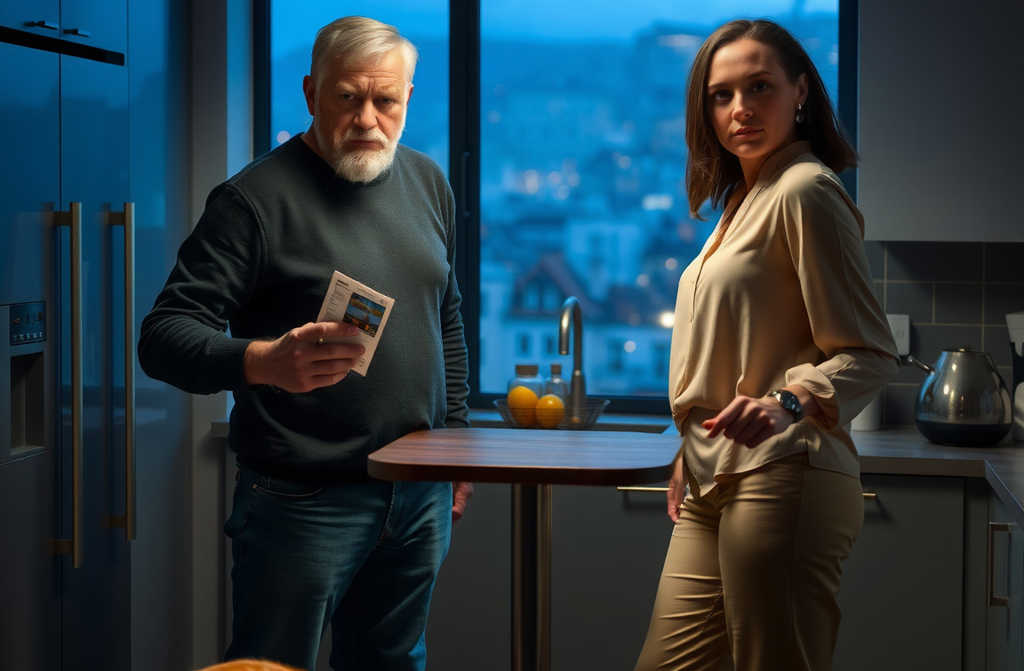
Hey love, grab a cuppa and settle in, because Ive got a story that still haunts me.
Im Stephen, 52, and I suggested we keep our money separate, thinking it would be fair and modern. Emily, 46, had been saving up for a holiday without even asking me first she just packed and left me on my own. I remember her saying, You wanted separate finances, Steve and I replied, But not *that* separate! She shot back, How separate then? You want me to save while you decide where I can spend?
Honestly, I still dont get when my brilliant plan turned against me. At first it seemed logical, convenient, andmost importantlyfair, at least in my head where I always see myself as the chief strategist of the relationship and my woman as the tidy executor, never taking initiative.
Im not a kid; Ive been married, divorced, made plenty of mistakes and learned a thing or two. When I met Emily eight years ago, I thought Id finally found someone I could live with without drama, without all those modern buzzwords about personal boundaries or financial independence that, as I used to think, only muddle a proper manwoman partnership where the man leads and the woman stands by his side.
We lived in my flat in London. Id always reminded hersoftly, not overtlythat the comfort she enjoyed was thanks to me. Everything was fine, until one day the idea struck me that would later become the undoing of the whole system Id grown so comfortable with.
Separate finances.
I brought it up calmly, without pressure, feeling almost noble. I said it was modern, honest, transparentevery adult should be responsible for their own money, which would erase those endless who paid what arguments. To my surprise Emily nodded straight away, no debate, no conditions, no tantrum, and said, Alright, lets give it a go.
Looking back, that should have set off alarm bells. When a woman agrees too quickly, it isnt always about meekness; sometimes shes already made up her mind, you just havent been told yet.
The first few months were pictureperfect. We split the grocery bill, council tax, utilitieseach paying our own share. I felt everything was finally fair, no one feeling used. Honestly, Id grown irritated before when I seemed to be paying more, even though I tried not to show itafter all, a man should be generous, but within reason.
And then the beauty of each on their own kicked in. It wasnt just about expenses; it was about freedom. And thats the part I missed.
Around six months in, I noticed Emily changing. Outwardly she was the samecooking, cleaning, caringbut there was a new calm confidence about her, a quiet independence that started to bug me. She stopped consulting me, stopped asking, stopped checking in. At first it was the little things, then it got bigger. New bags, shoes, purchases I couldnt account for, even though we were supposed to be saving for a joint summer break.
We had agreed to save together for a holiday, plan it properly, be adults about it. I thought shed be as responsible as me.
But the truth was, my own money was a bit of a mess. Id borrowed from friends, cleared old debts, splurged on small things, and the sum Id meant to save wasnt really saved. I never worried, thinking wed sort it out togethermaybe Id chip in more, maybe shed chip in less. To me, that was love, not bookkeeping.
Emily, however, saw it differently. She saw it as bookkeeping. One evening she calmly told me, I bought the tickets.
I was flatout confused. Tickets for what?
For the coast. Four weeks. With a friend.
It hit me like a brick. With a friend? What about me?
She replied, You said it was a waste of money.
I remembered. A couple of months earlier shed suggested we go together, and Id brushed it off, saying we could holiday cheaper at the cottage or the countrysidejust like normal folk. Shed heard me, drawn her own conclusions, and then she went off without asking me.
You couldve at least asked! I snapped.
Its my money, she said, deadpan.
Inside me, everything flipped. Yes, technically it was her money, but it felt wrongunmarital, unmanly. I tried to argue that decisions should be mutual, that you dont just up and leave your partner on his own as if his opinion doesnt count. She looked at me, calm, no screaming, no drama, and said, You suggested separate finances. Im just playing by the rules.
Thats when I realised Id trapped myself. In my version of a split budget, there was an unspoken clause: I decide, she participates. In reality, shed become an equal partnerright down to the rights, not just the duties. And I wasnt ready for that.
She flew away, leaving me with our cat, Misty, and a house that suddenly felt hollow, like a space that used to be mine but now belonged to no one. For the first time in ages I was truly alonenot just physically, but in the sense of lacking influence, authority, the role Id always assumed.
She kept texting, sending beach photos, talking about how relaxed she felt, and each message irritated me more because she didnt miss me. She didnt beg to come back, didnt feel guilty. Thats when I started wondering if the problem was actually me. Yet I still hate that thought, because its easier to blame her for going off the rails, getting too much freedom, than to admit I wanted a convenient dynamic where she was independent only as far as it didnt threaten my control.
When she returned a month later, tanned and tranquil, she was almost a stranger. We live together again, but the chemistry isnt the same. We no longer bring up money, and she doesnt either, but theres an invisible line between us nowa boundary we both feel.
The most painful realisation? It wasnt the pounds or the holiday at all. It was seeing what real equality looks like in practice, and not liking what I saw.
**A quick psychologists take:**
This is a classic clash between declared equality and an underlying need for control. Stephen proposed split finances as a fairness tool, yet secretly expected an informal hierarchy where his say still mattered. When Emily interpreted the rules literally and acted independently, Stephens cognitive dissonance spiked: outward equality, inward loss of power. That sparked irritation, resentment, and attempts to reclaim his old footing through blame and moral pressure.
Equality cant be halfbaked. You cant just divide expenses while keeping decisionmaking in one persons hands. Once Emily became financially autonomous, she also became autonomous in choiceswhere to travel, what to buy, who to spend time with. Stephens crisis wasnt her holiday; it was the crumbling of the relationship model where he felt he was the lead. Until he reevaluates his expectations of a convenient woman, any attempt at a truly equal partnership will keep feeling like a betrayal of his own comfort.


