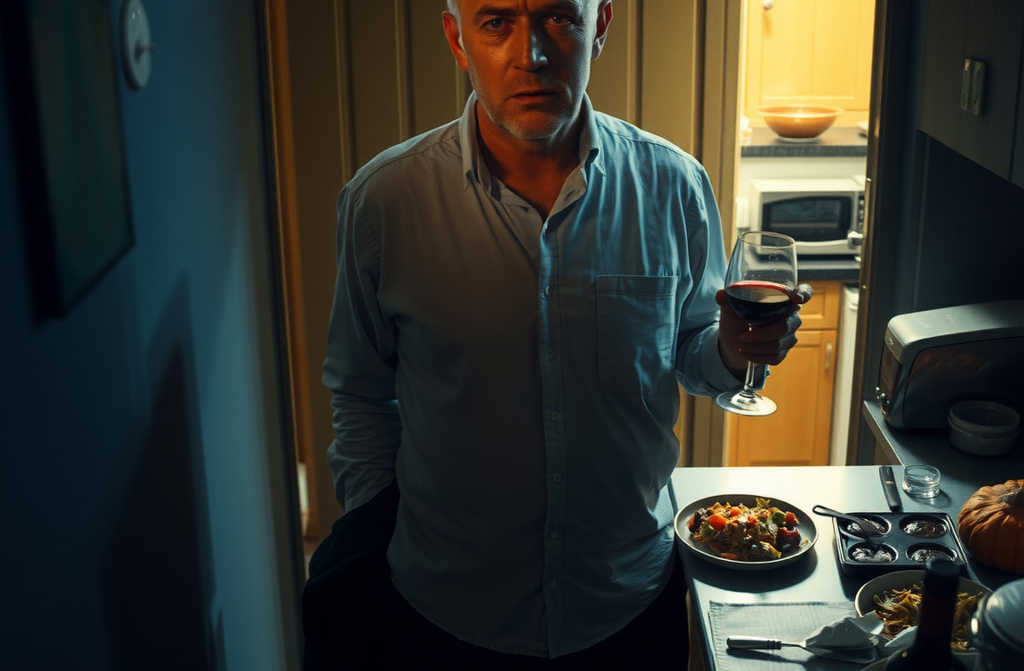
It was many years ago now, but the memory of that night still sits heavy in my mind, like a stone in a teacup. I was a fortyeightyearold widower who, after a handful of dates, found himself standing at the front door of a woman Id only known for a month.
I had driven out to Emilys flat in Croydon with a bottle of red wine and a nervous, almost boyish optimism that made my cheeks feel hot even now as I recall it. I was fortyfive when she first invited me in, and I thought I ought to have learned by then how to read between the lines, how to sense when a woman was merely being friendly rather than laying out a carpet for a future together. Yet here I was, still caught in the romance of a man who, despite his age, occasionally behaved like a schoolboy dreaming of a fairytale.
We had met on a dating website a month earlier. The first weeks were spent exchanging messages, then we met a couple of times for coffee in a little café on Borough High Street. I wont pretend I wasnt taken with her: her smile was warm, she listened attentively, and her jokes were light, not the kind that felt like an interrogation under a bright lampDo you own your own flat? Wheres your ex? Are you paying maintenance? What are your retirement plans?questions that would have made me feel like I was being graded.
Our early meetings were easy. We strolled along the Thames, sipped cappuccino, talked about films, work, and the way that by our age a date looks less like a romance and more like an interview with a glimmer of hope. We laughed, we shared stories, and I thought we understood each other.
Then, without much fanfare, she said, Come over on Saturday. Well have a sitdown. Ill make something. The words themselves were simple, but a man hears what he wishes to hear. My mind instantly painted a picture of a cosy evening: a quiet kitchen, wine flowing, conversation drifting, perhaps something more. I even ironed my shirt by hand, as if smoothing out the fabric could also smooth out my intentions.
I spent an inordinate amount of time in the wine shop, standing there like a sommelier in a provincial theatre, selecting a bottle that wasnt the cheapest but also wouldnt make me regret the expense when I glanced at the receipt later. Eventually, I chose a decent Merlot, paying in pounds, of course.
I arrived at seven. Emily answered the door almost as if shed been waiting there for me, her hair neatly done, her dress tidy, makeup understated but flawless. It looked almost too polished for a simple sitdown.
The moment I stepped inside, I realised the flat had been prepared not for a casual visitor but for an inspection by the health board, a fire marshal, and perhaps the chairman of the housing association. The floor shone as if a fresh coat of wax had just been applied; the hallway smelled of citrus cleaner, perfume, and a generous amount of food. There was an abundance of foodmore than a modest dinner, more like a banquet.
I made my way to the kitchen and stopped short. On the table lay a salad, then another salad, a tray of hot dishes, a platter of sandwiches, slices of cake, a few pies, and, unbelievably, a pot of soup. A soup for a romantic evening.
I looked up at Emily and, unable to hide the dry humour that had always gotten me out of awkward spots, said, Emily, are you expecting a regiment?
She laughed, though the tension in her eyes was evident. Oh, stop it. I just wanted to feed you properly. A man should have a proper homecooked meal, she replied.
Something in her tone rang a tiny bell in my heada bell that sounded more like a warning than a welcome. I handed her the wine. Here you go, I said.
She took the bottle, glanced at it, and answered, Thank you. Though I have a few more myself. She opened a cupboard, and three bottles of wine stared back at me.
Three. In that instant I felt like the guest who arrived at a wedding with a single rose while the banquet hall was already crowded with catered tables.
Are we celebrating something big? I asked, forcing a smile.
Why not? she said, her voice light. We should have a proper chat. The word proper caught me; we had only met a handful of times. Yet to her, proper seemed to mean a conversation the weight of a family gathering.
We sat down. She began ladling food onto my plate before I could even ask for a sip of wine. Try this salad, it has chicken. And this one has mushrooms. Ill bring out the hot stuff in a moment. Soup, yes?
Emily, let me
No, sit. I enjoy looking after my guests, she said, piling the plate as though Id trekked three days through the woods and now needed sustenance for the next mile. The plate soon resembled a miniature pantry.
I ate. I must admit, the food was excellent. Emily was a capable cook, but with each bite a strange discomfort grewnot from the food itself, but from the invisible contract that seemed to have been signed the moment I stepped through that doorway, a contract I couldnt recall ever agreeing to.
She poured wine for herself and for me, a ritual that felt more like the final sealing of a deal. Now were not in a café, were here like proper people, she said.
It is cosy, I replied, and it truly wasclean, bright, almost overfilled with comfort, as if someone had pumped the coziness through a garden hose.
Emily stared at me, not with the adoration of a woman who liked a man, but with the scrutinising gaze of an accountant checking a ledger missing a signature. George, Ive been thinking about us, she began.
I nodded, feeling the weight of the fork in my hand grow heavier.
About us?
Yes. Were not children. Were not in our twenties, where you can flit about with no intention.
At that moment I realised the evening had veered off the path Id expected. I had hoped for light banter, a chuckle about a neighbours noisy powertools, anything but a meeting of the minds on futures.
I agree were not children, I said cautiously. But arent we still getting to know each other?
Her brow furrowed. Thats what worries me. Getting to know each otherhow long can that last? At our age we should know what we want.
I wanted to say, Id rather finish my salad first, but the words were stuck, as if caught in a throat tightened by propriety. I want a normal relationship, I managed. I just think things should progress gradually.
Emily reclined in her chair. Graduallyhow? Another year of café dates?
Why a year?
Because thats what men always saygradually. Then they disappear, leaving the woman to wait.
She spoke faster, as if rehearsed. The dialogue felt prewritten, perhaps practiced in front of a mirror while she polished that immaculate countertop.
Emily, I dont want you waiting for something undefined, I said. But weve only known each other a month.
A month is enough to see whether someone is right for you, she replied.
Silence fell. For her, a month was sufficient; for me, it was not. I felt I had failed some internal timetable for falling in love.
She nudged another dish toward me. Eat, itll get cold.
I mindlessly lifted my fork. I was eating a plate of meat and potatoes while my future was being discusseda surreal sensation, as if I were being fed before a verdict was read.
She leaned forward. I thought we could skip the dribble. I live alone, you live alone. My flat is in a better area for you to commute. Theres space, theres room.
What for? I asked, my voice flat.
She stared at me as if I were being deliberately obtuse. For us, George.
I hadnt even taken a proper sip of the wine yet. You mean living together?
Whats so surprising?
Everything, I said, a faint smile twitching at the corner of my mouth.
She smiled too, a smile that said, I see.
Its clear, she said, but the clear was not about understandingit was the edge of resentment, a coat already pulled on over the shoulders of disappointment.
Were barely acquainted, I protested.
You already said that.
Because it matters.
It matters to me not to waste time. Im not a girl. Im fortyfive. I want a familya proper onewhere a man is present, where we share meals, make decisions together.
Her words were ordinary, honest even. I too had never imagined ending my days alone with frozen meals and a telly for company. I wanted warmth. Yet between I want to be near you and youll be the man in my life next week lay a gulf.
I tried to soften my tone. I get you. But a family isnt built over dinner.
She slammed her glass down. Then how is it built? By endless messages? By walks? By lets see?
I realised that your was not just about me. It was a chorus of past lovers, exhusbands, and other suitors whose ghosts now sat invisible at that table, tasting her salads while I was expected to answer for them all.
Im not them, I whispered.
And how would you know? she asked, the question sharp and honest.
I looked at herbeautiful, weary, composed, yet tightly wound. She was holding a glass as though it were the last lifeline to a life she wanted to forge.
A pang of pity surged through me. Pity, however, is a shaky foundation for any relationship. You can carry a bag up the stairs, but you cannot build a home on it.
She rose suddenly. Ill get the soup.
Emily, Im full.
Its fine, just a little more.
Really, no need.
She persisted, placing the bowl before me. That tiny insistence, that refusal to heed my refusal, tipped the scales more than any talk of cohabitation could. I said, No, thank you, but she didnt hear me. Her script had already been written; I was merely a character who had to eat the soup.
I stared at the steaming bowl and thought, George, you came for romance, not a casting call for a husband with a tasting menu of obligations. A nervous laugh escaped me.
Youre smiling, she observed.
Just nothing, I replied.
Is this funny to you?
No, just odd.
Odd? Am I odd to you?
I had to choose my words carefully. No, not you. It just feels like weve rushed into serious matters.
Her face grew cold. I see. You didnt come for serious topics.
I stayed silent. It was true; I hadnt. Yet admitting that would have sounded crude.
What did you come here for, George? she asked, the question hanging over the table like a lamppost in fog.
I was a man of fortyeight, with the weight of a marriage, a divorce, a mortgage, a cracked back, a silvertinged beard. Yet I felt like a schoolboy caught buying cigarettes from a kiosk.
I came to you, I said plainly.
No, you came for a pleasant evening. She shook her head, as if confirming a hypothesis.
I didnt answer, I said.
She nodded, satisfied with herself. Exactly.
Enjoying an evening with a woman I like isnt a crime, I said, a hint of defiance in my voice.
What then?
Then wed keep meeting, see if we fit, I answered.
I dont need a man to test me, she retorted.
Im not testing, I said.
You are. Youre testing whether Im convenient, whether Im fun, whether Im quiet when you need me. I dont want that.
She was no longer speaking just to me; she was speaking to the chorus of disappointments behind her. It eased nothing.
I pushed my plate aside. Emily, I think we should stop.
What do you mean?
Literally. I feel you need certainty that I cant give right now.
Convenient phrase.
It isnt convenient. Its honest.
Honest? Men call honesty what benefits them, she smirked. Youre right; I suppose youre a coward.
I felt a sting, not of anger but of embarrassment. I tried to be truthful.
I didnt promise you a future, I said.
And I didnt promise you a past, she replied.
But youre making it sound like I owe you something. I felt my shoulders slump.
She leapt to her feet. No one owes anyone anything! Of course not! Its the mens anthem, isnt it? Gradually. Then they disappear, and the woman waits.
Her words rushed out faster than she could think. I saw the rehearsed nature of the conversation, the way shed practised it perhaps in front of a mirror while she wiped the spotless kitchen tiles.
Emily, Im not here to be a placeholder, I said, my voice steadier now.
She stared at the three bottles of wine, at the immaculate cutlery, at the empty space where my future could have been placed. So youve come for nothing?
No, I came for a drink and a chat, not for a contract.
She laughed, bitterly. You think I prepared this feast just for fun? No. I wanted a proper conversation, a proper life.
I could see the tiredness in her eyes, the exhaustion of a woman who had been holding a glass like a shield against a tide of expectation.
I moved toward the hall, my boots making a soft thud on the polished floor. I think Ill be going, I said.
Her eyebrows shot up. Seriously?
Yes.
So you just leave?
I dont want an argument.
Whos arguing? she asked, a note of sarcasm in her tone. Just you and me.
Youre pressing me, I said.
She laughed, sharp. Pressing? I cooked, tidied, waited, wanted a decent chat, and you call that pressure?
I looked at the tablea spread of salads, hot dishes, soup, sandwiches, three bottles of wine, a kitchen so spotless a newspaper could lie on the counter without a wrinkle. Yes, I said, I call it pressure.
She paled, then flushed. So my effort was for nothing?
It wasnt for nothing, I replied. Youre not a waste.
Your words are empty, George. Youre a coward who wants a woman with no demands, no expectations, who smiles when it suits you and disappears when it doesnt.
Not a coward, I murmured.
She crossed her arms at the doorway. I thought you were something shady.
I wish Id said that earlier, I said, trying not to sound sarcastic.
She narrowed her eyes. And your ex left you, I assume?
A heaviness settled over me. Yes, thats right.
I exhaled slowly. Enough, Emily.
She snapped, What, uncomfortable?
No, youre making me feel like a guest at a funeral for a life I never asked to attend. I felt the absurdity of my own metaphor, but it fit.
She opened the door, held it for me, and said, Go. And dont write. Im not a backup plan.
I turned, and with a calm I didnt truly feel, I said, Youre not a backup. Im just not your option.
She wanted to answer, but I was already out on the staircase, the night air cool against my skin. The door shut behind me with a clang that sounded like a finality I could not ignore.
Outside, I stood in the drizzle, feeling both relieved and ashamed. I was not a hero defending a line; I was simply a man who walked away from a table laden with food and an unspoken contract.
I got into my old Austin, the engine sputtered before it caught, and I sat there for a while, replaying the kitchen in my head: Emily in her dress, the soup, the three bottles of wine, the expectation in her eyes that seemed to fill the tiny flat.
Could I have handled it better? Certainly. I could have said from the start that I wasnt ready for such rapid commitment. I could have laughed less at the soup. I could have avoided that foolish line about a regiment. I could have never driven to her flat if I didntNow, years later, I still smile at the memory, knowing that sometimes the most honest farewells are the ones spoken over empty plates and unopened bottles.


