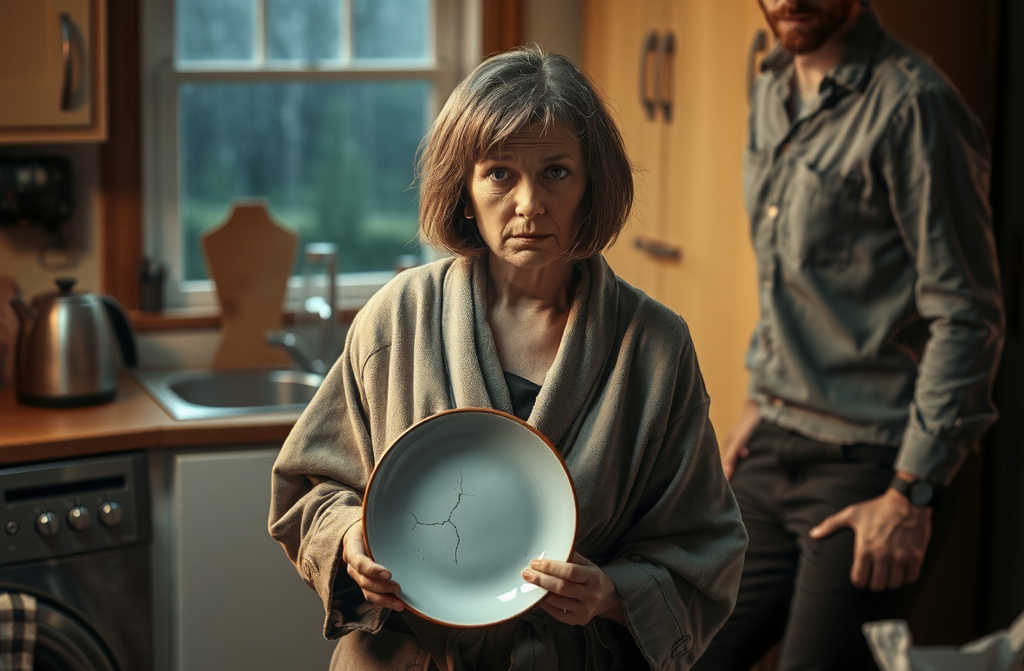
Ill always be there for you, Ill help you out, he promised, his voice steady. I didnt realise how quickly I would regret giving him not only my heart but also my life.
My name is Irene. Im fiftyfour. If someone had told me a few years ago that a mature woman with her own flat, a steady job, a modest state pension and a head on her shoulders could get tangled up because of a man, I would have laughed it off. I would have said, Im no longer a schoolgirl. You cant buy me with pretty words.
Turns out you cant buy me, but you can coax me with a simple, human phrase:
Ill support you, Ill help you.
Just seven words. And I, a halfhearted romantic with a passport, a bad back and a respectable work history, believed them.
We met purely by chance. His name was David. He was fiftytwo, divorced, his children grown, living alone in a modest twobedroom flat in Manchester. He wasnt a magazinecover model, but I wasnt exactly a supermodel after a night shift either, lets be honest.
David was calm, spoke quietly, and listened attentively. For a woman my age, that was sometimes more intoxicating than a bouquet of roses. When someone actually listens without interrupting, you start to think, Finally, a real person, not a couch with a remote control.
The first weeks felt like a gift. He called in the morning to ask how Id slept, in the evening to check if I was tired. He brought apples, a tub of cottage cheese, fresh rolls. Once he even bought me a hand cream because he noticed my skin was dry. I nearly wept it was funny, isnt it? A fiftyfouryearold woman moved to tears over a cream that cost just a couple of pounds.
It wasnt the cream that got to me. It was the fact that someone had thought about me.
I lived alone in a onebedroom flat, earned a small pension, and still owned my mothers old flat, which Id inherited. Not a fortune, but enough to keep the lights on. Id always managed everything myself council tax, groceries, medicines, a leaking tap, paperwork, the job, the shop. Even when life got hard, I got up and went on.
Then a man appeared who said:
Irene, why do you have to do it all alone? A woman deserves peace. Im here.
How could I not melt? After years of handling everything by myself, his words sounded like a warm blanket.
Two months after wed met, David suggested I move in with him.
At first I was frightened. Two months isnt long. I told him straight away:
Dave, we barely know each other.
He laughed:
Irene, at our age whats there to hold back? Were not twentysomethings anymore. We both know what we need.
That at our age line hit a nerve. It sounded reasonable no more games, just a sensible companionship. I thought, why be scared? Maybe life was still offering me a chance. Not a fairytale romance, but at least some normal warmth.
He kept saying:
Move in. You can rent out your flat. The money will give you peace. I wont hurt you. Ill support you, Ill help.
That sentence still tightens my chest when I recall it. It seemed like a pillar back then, and later turned into a mockery.
The move happened quickly. I packed a few pieces of clothing, a handful of dishes, my documents, medicines and a couple of photographs. I let a neighbours friend take over my flat. I was pleased at the extra income I thought I could help my daughter now and then, buy a few things for myself, maybe finally get those dental work Id been postponing for years. Id been putting it off forever.
David greeted me at the door, helped with the bags and said:
Now well be a family.
I stood in his hallway surrounded by suitcases and thought, Well, Irene, youve finally arrived. Maybe not everything is lost yet.
The first weeks were decent. I cooked, he praised me. We watched TV together he loved the news, I preferred soaps like *EastEnders*. We argued over the remote now and then, but it was harmless. I laughed at our little romance: he with his newspaper, me with my pot, both content.
Then the money talk began, slowly at first.
Irene, how much do you spend each month?
I gave a rough figure groceries, medicine, transport, a little something for myself. He frowned.
Thats a lot.
It made me uneasy.
Dave, Im careful with my money.
He looked at me as if Id said something absurd.
We live together now, so the money should be shared.
I didnt quite grasp what he meant. Shared could just mean pooling the grocery bill and paying the council tax together, which seemed fine. Im not stingy; if I share a life with someone, Im happy to share expenses. But he meant something else.
A few days later he said plainly:
Heres the plan. You hand me your pension, your salary and the rent you receive. Ill manage the budget and give you an allowance for your expenses.
I laughed, thinking he was joking.
Allowance? Am I a schoolboy?
He didnt smile.
Irene, dont take offence, but you spend on whatever you like. Im a man; I understand money better. We need to save, think about the future.
Something tightened inside me, but I soothed myself: Maybe hes right. I do buy a few unnecessary things a cheap sweater on sale, a toy for my granddaughter, extra vitamins at the chemist.
Now I recognise that was the first warning bell not a tiny bell, but a fullblown alarm. I ignored it, pretending it was just background music.
I asked:
Are your earnings also part of the joint pot?
He answered quickly:
Of course. Everything goes into the house.
Only later did I realise his everything never actually appeared. His salary seemed to evaporate into thin air paying off a loan, helping his son, fixing his car, settling old debts. My money sat in a drawer, then on a card, then disappeared altogether.
The first time I handed over my pension was odd. I withdrew the cash, brought it home, placed it on the table. He calmly counted it and said:
See? No problem. Now we have order.
I felt oddly exposed, as if Id handed over not just money but my voice.
Then came my salary, then the rent. Every month the same routine I gave, he recorded in a notebook with the seriousness of a bank manager. I joked:
Dave, you should at least stamp it, Received from Irene, lifelong hard work.
He smirked:
Dont start that.
And I didnt.
He handed me cash for groceries, sometimes for the pharmacy. When I asked for a haircut, he replied:
Why? You look fine.
The roots are showing.
Were not millionaires, Irene.
I went to the cheapest salon anyway. He later asked how much Id spent, and I felt guilty for spending on my own hair.
One day I bought a simple bathrobe at the market nothing fancy, just a cotton one with a few holes. I held it up proudly, and he said:
Dropping money again?
I snapped back:
Its a robe, not a yacht.
He took offense, stayed silent all evening. I followed him around like a guilty cat, then apologised for the robe. It sounds ridiculous now, a laugh thats a little twisted.
My world shrank to work, the flat, cooking, shopping, and reporting to David. I saw friends less often. He never outright banned me, but he was clever.
Back with Laura again? Shes bad influence.
Why bad?
After she leaves youre always upset.
I wasnt upset because of Laura; I was upset because I missed the freedom to laugh and speak my mind.
My daughter Emily at first was happy for me.
Mum, finally you have someone.
I kept the money stuff from her. It was embarrassing to admit that at my age Id handed all my earnings to a man. Id always taught her, Never rely on anyone. I was a good teacher, I suppose.
Three months in, I sensed something was wrong. Getting out was harder than moving boxes. You can pack a suitcase, but admitting youve been duped is far tougher.
Every day I argued with myself.
He doesnt drink. He doesnt hit. He buys food. Everyone has their quirks. Maybe Im just difficult.
He started commenting on my character more often.
Irene, youre getting nervous. Irene, youre hard to live with. Irene, you dont know how to be in a partnership. Irene, you see everything as a threat.
I began asking questions.
Dave, how much have we saved? Wheres the rent money? Why wont you show me the expenses? Why do I have to beg for tights?
He snapped.
You dont trust me?
That was his favourite line, and I fell into it each time. To say I dont trust you meant I was the bad one; to say I trust you meant I should just keep giving.
One evening I finally demanded:
Show me how much we have.
He was at the kitchen table, slowly peeling an apple, as if carving a statue.
Irene, youre trying to control me.
Im not controlling you. These are my money too.
He raised his eyes:
Yours? We agreed the budget was joint.
Joint means both of us know.
He slammed a knife onto the table.
Thats why I never get involved with women. First they say I love you, I believe you, then it turns into bookkeeping.
I felt sick, but I stayed silent. The fear was internal: if I left now, where would I go? My flat was rented out, the tenancy agreement was still in place. How could I explain to everyone that Id been lured into a financial trap?
Six months later it ended quietly. No shouting, no broken plates, no cinematic showdown. It happened in the kitchen, under the kettle, while I was in slippers with wet hands from washing dishes.
David came home, ate, said nothing, then sat and said:
Irene, we need to talk.
I recognised the tone immediately.
About what?
Were not compatible.
I was at the sink, holding a slightly cracked plate, and stared at that crack as if it were a metaphor for our relationship.
What do you mean? I asked.
Straight up. Youre a good woman, but were different. Its hard for me. I want you to move out.
I didnt feel angry at first, just bewildered.
Where? I asked.
Back to your flat.
Theres a tenant.
Sort it out. Youre an adult.
His youre an adult felt like a slap. I had been not an adult enough to hand over my earnings, and now, in five minutes, I was supposedly grown.
I sat opposite him.
Fine. Then return my money pension, salary, rent income. At least part of it.
He stared as if Id asked for his kidney.
Which money?
I laughed, a nervous sound.
Dave, seriously?
The money was for life food, bills, everything. We lived together.
I gave you everything. I have almost nothing left.
Irene, dont dramatise.
The word dramatise hit a nerve. Hed taken my money, evicted me, and I was being called dramatic.
I said:
You promised support.
He shrugged:
I tried. It just didnt work.
Just like a cake that wont rise.
I packed my things in two days, leaving some behind because I was exhausted. I called the tenant, explained, and she agreed to move out in a month. I stayed with Laura, my longtime friend, for a while. Laura welcomed me in a robe, a towel on my head, and said:
Come in, victim of grand love. Lets have tea and swear a bit.
I broke down, not quietly, but with a raw, throaty sob. My nose was swollen, my breath shaky, the kind of sound you hear when you finally let yourself feel.
Laura didnt soothe me with sweet words. She was blunt.
Did you hand over the money? Yes. All of it? All. Youre a circus act, arent you? Thanks for the support. Want a medal? You still have a flat, a job, a brain, probably in your bag somewhere.
I was angry at her for a minute, then realised shed forced me to face the truth. I didnt need a pat on the back; I needed to get back to life.
A few weeks later I learned David had bought a new car. Not brandnew from a showroom, but a shiny secondhand one. A neighbour mentioned it casually:
Your exboyfriends got a car now. Looks like hes doing well.
I stood there with a bag of potatoes, feeling everything inside me collapse not anger, but humiliation. My pension, my salary, my rent, the haircuts Id postponed, the dentist work Id delayed, even that cheap robe all ended up on four wheels.
That day I sat on a kitchen stool, jacket still on, staring at nothing. I thought, How could I, Irene? Ive lived a full life, seen a lot. How could I be so foolish?
The worst part wasnt the betrayal; it was my own selfblame. When a man lies, it hurts, but when you keep beating yourself up, the darkness deepens.
I went to the bathroom, washed my face, and looked at my reflection. My eyes were red, hair still needing dye. I said aloud:
Well, hello, experienced woman. Your experience cost me a car, didnt it?
A small laugh escaped, halfthrough tears. It was the first genuine sound in weeks.
I never took him to court. There were no receipts, no clear paper trail. He was clever enough to make everything look like a joint life. A solicitor told me I only had a chance if I could prove every single transfer, which would cost me more in stress than Id gain.
I chose a different path returning to my own life.
The tenant moved out. I went back to my flat, sleeping the first night on the old couch without a sheet because the bedding was still in a box I couldnt locate. I lay under a blanket listening to the hum of the fridge. That sound became the most comforting thing my fridge, my flat, my walls. Nobody would ask me each morning how much Id spent on bread.
I started receiving my pension on my own bank account again, my salary landed in my name, and the rent money stayed untouched for a while while I took a breather. The amount was smaller, but it was mine, and that felt priceless.
The first thing I bought was a decent bottle of hair dye, then a proper shampoo, then a slice of cake with cream just one. I sat at the kitchen table, ate it with a fork, and thought, Heres the luxury of a mature woman: a slice of cake without having to account for it.
I booked a dentist appointment. I wasnt an heiress, but I could afford to fix one tooth at a time. Each payment felt less like a splurge and more like an investment in myself.
I finally told Emily everything. She was silent at first, then asked:
Mum, why didnt you tell me sooner?
I answered:
I was scared youd think I was foolish.
She cried.
Mum, Id have helped you.
That hit me hardest. Shame had held me tighter than the man who stole my money. He was gone, but the shame lingered, whispering, Stay silent, dont embarrass yourself.
Now Im learning not to stay silent.
I dont see myself as a saintly victim. I made the choices moving in, handing over money, turning a blind eye. But theres another truth: trust does not give anyone the right to use you.
I wanted love simple, ordinary. Sharing a dinner, going to the shop, arguing over the remote, treating a high blood pressure,In the end I learned that love must be built on mutual respect and honesty, not on promises that hide control, and that safeguarding my own heart and my own purse is the truest way to keep my freedom.


