The suitcase was already leaning against the front door, and on the hob the stew was still bubbling thick, meaty, with those little buttery scones on the side. Hed always liked it that way.
Eleanor was drying her hands on a towel, halfmechanically, while she stared at that familiar back of his head, at that little mole behind his ear that shed kissed a thousand times. She barely recognised him.
Off on a business trip? she asked.
No, Eleanor. Im leaving.
The words hung in the kitchen like the smell of burnt toast.
Where to?
Somewhere else.
The towel slipped from her grasp.
Edward?
Eleanor, lets not make a scene. We both know its over. I finally decided to go, you havent.
Over? she laughed, a nervous, scared laugh. Tomorrows our anniversary. Eighteen years.
Exactly. Eighteen years of the same stew.
The blow landed right in her chest. She gasped for breath.
I quit my PhD for you. I could have been
You could never have been anyone, he said, smiling that kind of rueful smile people wear when theyre sorry. A conservator. Who needs that now? Icons, dust I gave you a life, you know an apartment, a car, a seaside holiday every year.
You gave?
Fine. The flats on me, but Im not a monster. Stay a month or two, then well figure it out.
She clutched the back of a chair until her fingers went white.
Whos she?
Does it matter?
Who?
He glanced at his watch.
Clara. Thirtytwo. Shes alive, Eleanor. She goes to the theatre, skis, laughs. And youve turned into a housewife without even noticing.
Eleanor stayed silent, a lump forming in her throat.
Edward hoisted the suitcase, turned to the door, and something flickered in his eyes not regret, but a sting, like the feeling a man gets when he abandons an old dog at a shelter.
Dont worry. Thirtyeight isnt a death sentence. Enjoy your freedom, Eleanor. Youve earned it.
The door shut.
The stew kept cooling on the hob.
The first week she didnt cry. She wandered through the flat like she was touring a museum of someone elses life his shirts, his toothbrush, an untouched cup on the table.
On the eighth day, her phone rang. It was Agnes.
Eleanor, you alright?
She burst into tears so hard the neighbour downstairs knocked, asking if everything was okay.
Agnes Im thirtyeight now. I feel empty. Eighteen years of making stew, I cant even remember the last time I held a paintbrush
What do you remember?
Everything
You remember why you went into conservation?
Eleanor froze. In her mind she saw the Tate Modern, a nineteenyearold her standing before a massive triptych, tears in her eyes because people could create such beauty and keep it alive.
I remember.
Then go and fetch your paints from the storage. I saw them five years ago, theyre still there.
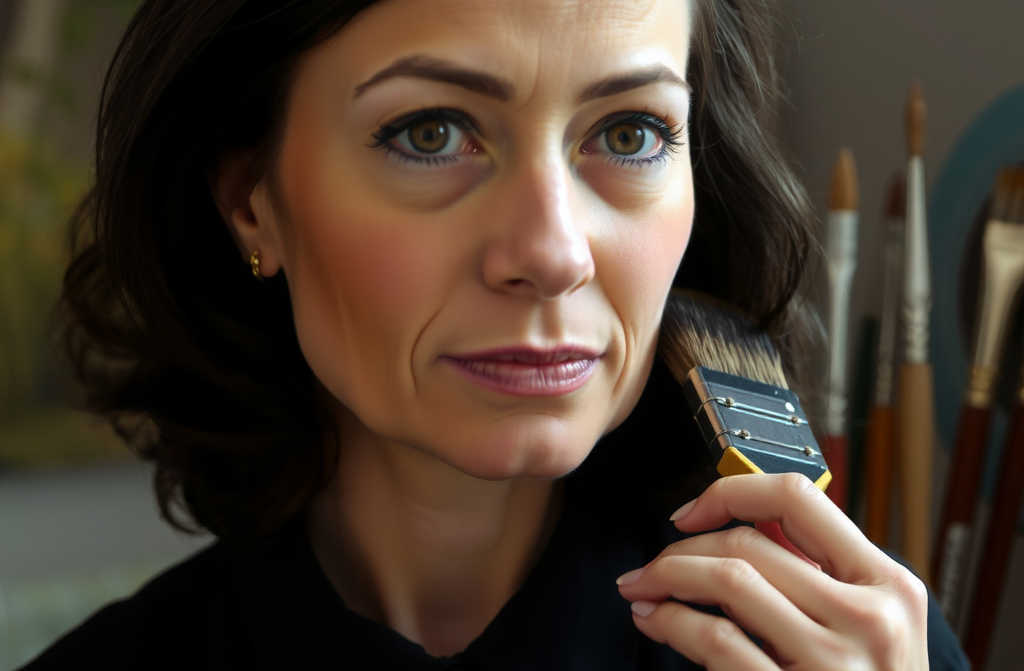
She dug them out of an old shoe box under dusty curtains. The paints were dried out, half ruined, but the brushes were intact the sablehair ones shed bought on a scholarship after giving up lunches.
She sat on the floor of the pantry and wept, but this time it was quiet, soft.
The next morning she signed up for a paid course at the Royal College of Art. The money was the last of the savings shed set aside for a holiday that now seemed pointless.
She went to the hairdresser, chopped off the long braid Edward had forbidden her to touch for twenty years. In the mirror she saw a stranger sharp cheekbones, fierce eyes.
Well, hello there. Long time no see, she muttered to herself.
Three months of study followed museums, lecture notes, latenight sketches that started timid and grew confident. Her hands remembered the strokes; they never truly forgot.
In February Agnes called again.
Eleanor, listen. Remember Arkady Lev, the guy Mike works for? His mother passed away, and he inherited an old house in Kent. Its full of icons, a whole shelf. He wants to ditch them
Dont you dare! Eleanor snapped. Let him leave them alone!
I was thinking you might look? Hell pay.
Fine. Tomorrow.
The icons were in terrible shape eight of them blackened, flaking, cracked. Eleanor leaned over them, her heart thudding so loudly she thought shed hear it.
This one I need a lamp to see it properly, but Im pretty sure its seventeenthcentury Northern. Very valuable, she whispered hoarsely.
He raised an eyebrow.
How much?
I cant give you a price for restoration, but selling it later could fetch a lot.
Can you restore it?
She stared at the faint faces emerging from the soot. It was a chance, the only one shed seen.
I can.
The work took six months. She rented a tiny workshop on the outskirts; the smell of solvents made the whole building feel suffocating. She survived on buttered toast, lost twelve kilos, broke down twice when a mistake almost ruined everything, and once called her old professor at four in the morning the saintly woman showed up an hour later with a thermos of tea.
Finally the first icon emerged, bright and clean.
Arkady Lev stared at it, speechless.
Its a miracle, he said.
Its not a miracle. Its work, Eleanor replied.
He paid double. Within a week his friend called, then that friends friend, then a gallery owner from Mayfair. Word spread faster than gossip on the tube.
A year passed, then another.
Now Eleanor lived in a rented flat on Cheyne Walk, with high ceilings and her own studio on the north side of the river. Orders were booked half a year in advance commissions for two monasteries and a private collection of a wellknown tech entrepreneur, whose name always appeared in the papers with a breathy Sir.
His name was James Whitaker. He would come to the studio himself, never sending couriers. Hed sit by the window and watch her work, sometimes bringing coffee, sometimes nothing at all.
Odd client, Mr. Whitaker, she joked once.
Im an odd sort of man. Mind if I stay?
No problem.
He was fortyfive, a widower, eyes sharp like a pianists, though he never played a piano, only the markets symphonies.
There was nothing romantic between them yet. Still, Eleanor sometimes found herself waiting for his visits.
One evening she didnt want to go out, but Agnes urged her there was a gallery opening on Baker Street, the whole London art scene would be there, and she had clients to see.
Eleanor slipped into a simple black dress the first dress shed ever bought from a decent designer, a month ago. Pearl earrings, a gift from a grateful patron. Heels shed almost forgotten how to walk in.
James arrived in his own car, no chauffeur.
You look radiant, he said.
She laughed, genuinely, for the first time in ages.
The room buzzed with chatter, champagne flowed. Eleanor lingered by a painting by John Constable, pretending to study it, just catching her breath.
Eleanor? a voice called.
She turned.
Edward stood there, older, hair silvered, bags under his eyes, a glass in his hand trembling slightly. Beside him a slim young woman, arms crossed, looking bored.
Edward, lets go, this is boring
Hold on, Clara, he said.
He stared at Eleanor, as if trying to place her.
You you look different, he murmured.
Time changes things, she replied.
Clara tugged his sleeve.
Whos she?
This my exwife.
Clara gave Eleanor a quick, appraising glance from shoes to earrings. Nice to meet you. Ill be at the bar.
She left, her heels clicking away.
They were left alone in the middle of a crowd.
So, what brings you back? Edward asked.
I work. Im a conservator. I have clients here.
A conservator? he laughed. Seriously?
Yes, seriously.
Eleanor he moved closer, the scent of whisky on him. I have to tell you something. I was a fool.
She said nothing.
This Clara, shes a nightmare. Cant even fry an egg. All clubs, resorts, restaurants. Im tired, Eleanor.
I can imagine.
Im getting a divorce. Already filed. He grabbed her hand. Lets try again. You loved me, right? Always did.
She looked at his fingers once hers, now strangers.
She gently slipped her hand free.
Edward, do you remember what you said to me when you left?
He frowned.
You said enjoy your freedom.
Eleanor, I didnt mean it like that
Wait. I want to thank you. No sarcasm. She looked at him, really looked at him, and for the first time in her life she saw not a tyrant or a cheat, but an exhausted middleaged man whod lost the most important game. It was painful, but human.
Edward, I wont take the ring youre offering. Give it maybe to my niece, or to a church.
One thing Ill say. Thats all. Okay?
Okay.
Thanks for leaving.
He stared, confused.
If youd stayed, Id have been cooking stew until I was sixty, hating you in secret, hating myself. Now I dont hate anyone. Thats rare.
A single tear rolled down his cheek, he didnt wipe it.
Take care of yourself, Eleanor said, pulling on her coat. She turned at the door, saw him slumped, shoulders trembling.
She stepped out into the cold night, wind biting, smelling of leaves and a faint whiff of smoke.
She walked down the boulevard, tears streaming silently, not from grief or triumph, just the quiet relief of a chapter finally closing without splinters.
Deep inside a tiny knot of doubt lingered. Was it all for nothing? Could eighteen years have meant anything after all?
She reached the tube station, paused for a moment, then decided no, it wasnt wasted.
She descended the escalator.
The Novgorod icon turned out to be far more complex than shed imagined three layers of history. The bottom was sixteenthcentury as Boris claimed, then an eighteenthcentury overlay, then a latenineteenthcentury repaint. She removed each millimetre by millimetre for almost a year.
During that year James proposed in April. Not over dinner, not with a ring he was too sensible for that. They sat in her tiny kitchen, sipping tea.
Eleanor, will you marry me?
Just like that?
Why make it harder? Were not twentysomething anymore. We both know what we want.
What do you want, Mr. Whitaker?
You. All of it. For the rest of our lives. If youre not ready, Ill wait. Im patient.
Give me until autumn.
Until autumn it is.
He didnt mind. He really was patient.
In May Agnes told her that Edward had moved to the countryside, sold his London flat, bought a cottage in Surrey. Hed split from Clara quietly, now living with an older widow who made him soup. Eleanor smiled at the news at least hed found some peace.
In August she finally lifted the last layer off the Novgorod icon. Beneath it lay the face of the Savior serene, stern, painted by an unknown hand five hundred years ago, a witness to wars, revolutions, migrations, auctions, and finally homecoming to a greatgrandson of a priest executed in 37.
She called Boris, the collector, in the middle of the night.
Boris, its open, she whispered.
Silence on the line, then a soft sob from a distant flat on the Isle of Dogs.
Madam, he finally said, voice trembling, Im coming now. I cant wait till morning.
He arrived at seven a.m., unshaven, in a crumpled suit, carrying a box of cheap chocolates as if hed just left a nursery.
He knelt before the icon. Eleanor turned away, giving him space with the ghosts of her grandmother, greatgrandfather, and all that tangled, bright history compressed into her studio on Cheyne Walk.
In September Eleanor married.
The wedding was modest. Two close friends, Agnes and her husband, a former lecturer from the Royal College, Boris himself, whod flown in from StIves, and a few monks from the monastery shed worked for, sipping elderflower cordial in a corner.
She wore a simple cream dress, a single white rose tucked in her hair, no veil. James slipped a thin whitegold band onto her finger no diamonds, she didnt like sparkle.
She was fortytwo.
That night, after the guests had gone, they stood on the balcony of their new flat, wine in hand, quiet.
Eleanor, Ive just realised something, James said.
Whats that?
When Edward left, he told me to enjoy my freedom. He meant it as a joke, but it felt like a blessing.
James took her hand, kissed her knuckle, said nothing more. Sometimes its nicer when someone doesnt try to answer every line with poetry.
She finished her wine, set the glass down.
Tomorrow she would head back to the studio. There lay a new commission a plain nineteenthcentury icon from a little village church near York. No provenance, no legend, just a humble piece brought by a local vicar in a canvas sack.
She smiled, thinking of the work ahead, and of how far shed come.


