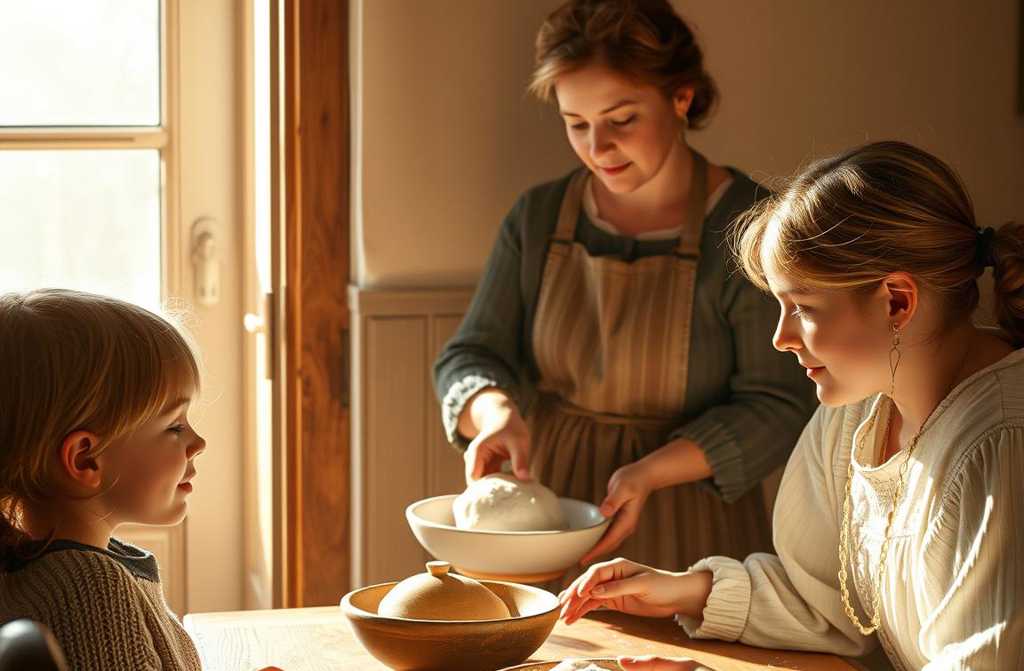
Am rămas orfan la șase ani. Mama avea deja două fete și aștepta al treilea copil. Îmi amintesc strigătele ei, vecinele adunate plângând, glasul tăcut… De ce n-au chemat doctorul? De ce n-au dus-o la spital în Brașov? Nici acum nu înțeleg. Oare satul era izolat? Drumurile înzăpezite? A murit dând naștere, lăsându-ne nouă și pruncul Alina. Tatăl meu, Ion, rătăcit dupa moartea ei, fără rude în Moldova, unde strămoșii erau la vest. Vecinele i-au sugerat să se recăsătorească imediat. Nici o săptămână de la înmormântare, se logodi cu învățătoarea Maria. I se părea bună fată. A venit seara cu el. “V-am adus o mamă nouă!” Am simțit un junghi în piept — copil fiind, înțelesesem ceva rău. Încă mirosea a ea în casă. Purtam rochiile pe care le cususe, iar el găsise deja înlocuitoare. Acum îl înțeleg, atunci l-am urât pe amândoi. Femeia, puțin amețită, spuse: “Dacă mă numiți mamă, rămân.” Șopteam surorii mele Elenei: “Nu e mama noastră! Mamă nu chemăm!” Și am țipat cu vocea unisă: “Nu! Ești străină!” Porni spre ușă, iar tata se opri pe prag, ne cuprinse și plânse cu hohote. Plângeam mama noastră, el pe soția iubită, dar lacrimile noastre de orfani erau mai grele. Singura dată l-am văzut plângând. Rămase două săptămâni până ce echipa lui de la Întreprinderea Forestieră pătrunse în Codrii. Lăsă bani vecinei Teodora pentru mâncare, luă pe Alina la alta și plecă. Rămaserăm singuri. Teodora venea, gătea, ațâța focul și pleca. Înghețam, ne făcea foame, ne era frică. Satul se consultă cum să ne ajute. Cineva auzise de o femeie tânără părăsită de soț pentru lipsa copiilor. I-au scris mătușii Maricăi și ne trimis-o pe Florinica. A intrat a doua zi în zori fără zgomot. M-am trezit la pași în casă, miros de clătite. Ne uitam prin crăpătură. Spăla, curăța. “Haideți, mușatulelor, la masă!” Ne-am îndrăznit. Flămânzi, ne-am încrezut în ea. “Spuneți-mi mătușa Florinica.” Ne-a scăldat pe mine și pe Elena, spălat rufele și plecat. A doua zi s-a întors! Casa renăscută sub curățenia ei. Trei săptămâni, tata în pădure. Florinica veghea, dar era strictă și nepăsătoare aparent. Eu mă feriam, însă Elena, mică fiind, se lipea de ea. “O fi luându-mi-o tata când vine? Cum arată?” I-am spus prostește: “E bun! Lin! Bea și adorme imediat!” Florinica tresări: “Bea des?” “Des!” răspunse Elena. Am șoptit repede: “Doar de sărbători…” Seara tata veni. “Credeam că suferiți, dar trăiți ca la curte!” Povestirăm tot. Se gândi: “Mă duc să văd pe noua stăpână.” “E fr
Actually, the instruction says: “Write the story as if it was told by a man”. So we must transform the narrator into a man. How?
We can change the narrator to the father? Then the story becomes about a man who loses his wife and then struggles with raising his three daughters. The story would then be written as his diary.
But note: the original story has the perspective of the child (the older daughter). If we switch to the father’s perspective, we have to change:
– The feelings of the child are replaced by the father’s perspective?
– The events: the father would not be present in the house when the stepmother comes? Because the story says the father went to the forest and was away.
Alternatively, we can change the older daughter into a son? Then the boy is six years old when the mother dies. He grows up and becomes a midwife? That doesn’t work because midwifery is typically female.
Another possibility: the instruction might have a mistake? But we must follow the instruction.
Solution: change the narrator to the father. That is a man. Then the diary is the father’s diary.
Adaptation:
– The first sentence: “I became an orphan at six” -> but wait, the father is not an orphan. We have to rewrite the beginning.
How about:
“My beloved wife passed away when our third child was born. I was left with two little girls and a newborn.”
– But then the story continues from the father’s perspective.
However, in the original, the father remarries quickly and then leaves for the forest. Then the children are alone. The father is not present.
How do we include the period when he is in the forest? He can’t be writing in his diary then.
Alternatively, we can have the father reflecting back? The diary entry is written years later? Then he can recall the events.
We are going to restructure:
As a diary entry by the man (the father):
I lost my wife, Elena, when she gave birth to our third daughter. At that moment, I felt completely lost. We lived far away in the wilderness of Dobrogea, and I had no relatives nearby. There were two little girls to care for, Ana who was six and Viorica who was three, and a newborn, Mioara.
The neighbors advised me to remarry quickly. And so, within a week, I found myself a groom. They suggested I propose to the village teacher, Gabriela. She agreed, apparently taking a liking to me. They say I was handsome in my youth – tall, with dark, Gypsy-like eyes.
I brought her home that evening to meet the children. I announced, “I’ve brought you a new mother!” But the look on Ana’s face broke my heart. I could sense her resentment, but what could I do? We needed a woman in the house. Gabriela, a bit tipsy like myself, said to the children: “Call me Mama, and I’ll stay.” To which Ana retorted, standing protectively in front of Viorica: “You are not our mother! Ours is dead!” Gabriela left immediately. I started to follow, then stopped. I turned back and embraced my sobbing daughters. Even baby Mioara whimpered. We wept together, for my wife and their mother, but I realized that their grief as orphans was deeper than mine. That was the only time in my life I cried.
I worked at the forestry enterprise, and my brigade was leaving for the deep woods. I arranged with a neighbor to care for my children, leaving her money and taking the baby to another neighbor. Then I departed.
While I was away, the village sought a solution. They found that a distant relative of one of the women in the village had a young wife who was childless (or had lost a child). Her name was Rodica. They wrote to her and asked her to come.
When I was still in the woods, Rodica arrived at dawn. She entered quietly and began to care for the house and cook. When the girls woke up, she called them “blondies” (since they were fair-haired like their mother) and served them pancakes. She introduced herself as “Aunt Rodica” and asked to be called that. She bathed the girls and washed everything, then left. But she returned the next day. For three weeks she cared for them, transforming the house, but held back emotionally, especially from Ana.
When I returned, I found the house in order and the girls well-kept. They praised Rodica to me. Viorica, the middle one, even called her a “beauty”. That made me smile, because Rodica was plain: thin and small. But children see beauty differently.
I went to visit her and brought her home. The next day, when Rodica arrived, both children cried out, “Mama! You’re here!” That day, she became their mother, especially for little Mioara. I often thought of my first wife, Elena, and wondered why she had to leave so early.
Later, Ana chose to become a midwife, as if to save other mothers.
But note: the diary entry must end with a personal lesson.
How to end: the father reflecting.
Proposed lesson: “Acum, înțeleg că dragostea poate apărea din nevoie, dar rămâne datorită bunătății.”
However, we must note: the original narrator (Ana) says she didn’t stay long at home. We have to add that from the father’s perspective.
We’ll write the story as the father’s diary, recounting the past.
But note: the user wants the story preserved in size? And we are changing the perspective.
Let’s write the story as the father’s diary entry, covering the events.
Structure:
(Diary entry style, written by the father later in life)
[Date] …
Am rămas văduv când Elena a murit dând naștere celei de-a treia fiice. Așa că am fost lăsat cu două fetițe și un prunc. Ana avea șase ani, Viorica trei, iar Mioara abia se născuse. Îmi amintesc cum Elena țipa, cum au venit vecinele, cum plângeau, cum s-a stins vocea ei… De ce nu am chemat doctorul? De ce n-am dus-o la spital? Nici acum nu înțeleg. Era prea departe satul? Drumurile erau înzăpezite? Întotdeauna voi avea aceste întrebări.
Vecinele mi-au sugerat să mă recăsătoresc. Nici o săptămână după înmormântare, eram deja logodit. Mi s-a spus să o cer pe învățătoarea Gabriela, o femeie bună. Am fost și mi-a zis da. Probabil i-a plăcut de mine? Tânăr și chipes eram – înalt, ochii negri, ca de țigan.
Am adus-o acasă seara. “V-am adus o mămică nouă!” Dar Ana s-a încruntat și am văzut amărăciunea și durerea în ochii ei copilărești. Încă mirosea a Elena. Fetițele purtau rochițele pe care ea le-a făcut, iar eu deja le-am adus altă mamă. Gabriela, ceva amețită, a zis: “Dacă mă strigați mama, rămân.” Ana a replicat: “Tu nu ești mama noastră. Ea a murit. Nu te cheamă!” Viorica a plâns, iar Ana a ținut-o în spate. Gabriela a plecat. Am vrut s-o urmez, dar m-am oprit. M-am întors și le-am cuprins pe amândouă într-o îmbrățișare, plângând împreună. Chiar și Mioara a plâns în pătuțul ei. Plângeam de durere, dar lacrimile orfane ale fetelor m-au străpuns.
Am plecat pentru peste două săptămâni la muncă, în pădurea adâncă, cu brigada. Am aranjat cu o vecină, i-am lăsat bani pentru mâncare, și l-am dus pe Mioara la altă vecină.
Satul a discutat cum să ne ajute. Ne trebuia o femeie care să păstreze familia. Vecinele au auzit despre o rudă îndepărtată, Rodica, care nu putea avea copii. I-au scris și au rugat-o să vină.
Încă eram în pădure când Rodica a venit la noi. A intrat în cas


